 |
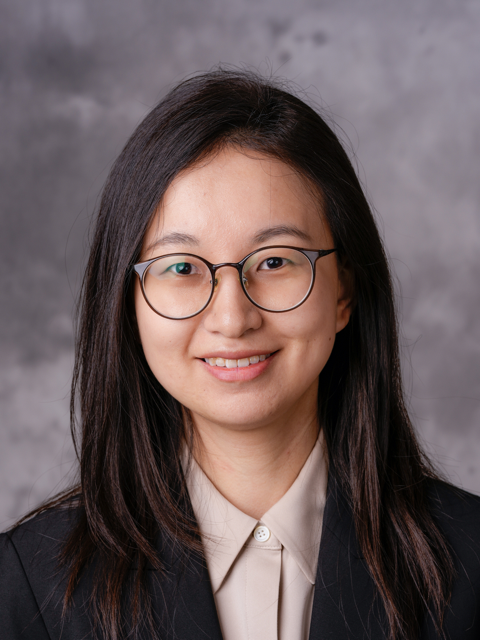
Xiaoxuan Yang Assistant Professor
Charles L. Brown Department of Electrical and Computer Engineering
University of Virginia
Email: xiaoxuan@virginia.edu |
Highlights
SpikON: A Dual-Parallel and Efficient Accelerator for Online Spiking Neural Networks Learning.
Norm-Q: Effective Compression Method for Hidden Markov Models in Neuro-Symbolic Applications.
Titanus: Enabling KV Cache Pruning and Quantization On-the-Fly for LLM Acceleration.
Exploring and Optimizing System Performance in Compact Processing-in-Memory-based Chips.
Multi-Objective Optimization of ReRAM Crossbars for Robust DNN Inferencing under Stochastic Noise.
ReTransformer: ReRAM-based Processing-In-Memory Architecture for Transformer Acceleration.
Simulation Frameworks
Neuromorphic Computing: Online SNN Learning and Acceleration [Code], Full-Integer SNN Training and CIM-based Acceleration [Code to be updated].
Processing-in-Memory Design: Performance and Data Movement in Compact PIM Design [Code], KV Cache Quantization and Pruning [Code].
Compression and Quantization: Norm-Q Quantization for Hidden Markov Model in Neuro-Symbolic Application [Code], Hessian-Enhanced Robust Optimization [Code].
Noise-aware Training: Photonic Generative Model [Code].
Biography
Xiaoxuan Yang is an Assistant Professor in the Electrical and Computer Engineering Department at the University of Virginia. She was a Postdoctoral Scholar in the Robust Systems Group at Stanford University. She received her Ph.D. degree in Electrical and Computer Engineering at Duke University. She received the B.S. degree in Electrical Engineering from Tsinghua University and the M.S. degree in Electrical Engineering from the University of California, Los Angeles (UCLA). Her research interests include in-memory computing, neuromorphic computing, energy-efficient design, and hardware-software co-design. Her recent research focuses on spiking neural network acceleration, computing-in-memory architectures, and hardware-software co-design for emerging AI workloads. Her work explores low-precision and online learning for neuromorphic systems, as well as efficient acceleration of Transformers and large language models. She has received the Best Paper Award at GLSVLSI 2025. Her research work won Third Place of the ACM Student Research Competition at ICCAD and Best Research Award at the ACM SIGDA Ph.D. Forum at DAC. Xiaoxuan was recognized as a Rising Star in EECS, an NSF iREDEFINE Fellow, a Machine Learning and Systems Rising Star, and a Rising Scholars Postdoc Fellow. Xiaoxuan is also actively involved in professional service through technical program committees, journal review and editorial activities, and workshop and conference organization. She has received the DAC Outstanding TPC Member Award and GLSVLSI Service Recognition Award.